E-commerce is more than a website with a cart. Here is what it really means for a restaurant, shop or brand, the channels it covers, and the parts that have to work together behind every online order.
E-commerce in one sentence
E-commerce means selling your products online: the customer finds what they want, orders it and pays on a website or an app, and you deliver it or prepare it for pickup.
It is more than a website
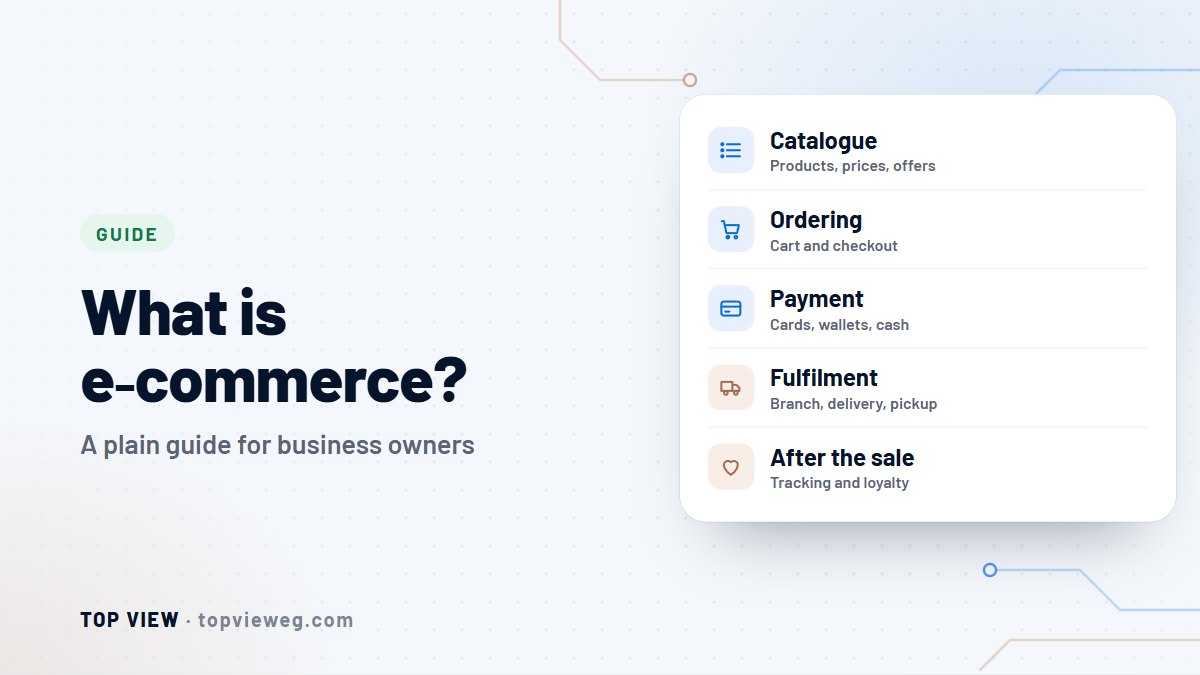
Many owners picture e-commerce as a nice-looking website. In practice, every online sale has five parts, and each one has to work:
- The catalogue: your products, prices, photos and offers, kept up to date.
- Ordering: a cart and checkout that are quick and easy on a phone.
- Payment: cards, wallets or cash on delivery.
- Fulfilment: the order reaches the right branch, gets prepared, then delivered or picked up.
- After the sale: order tracking, customer service, and a reason to order again.
If one part is weak, customers feel it: a wrong price, a late order, a payment that fails. That is why e-commerce is as much about operations as it is about design.
The channels you can sell through
- Your own website: an online store in your brand’s name that anyone can open from Google or a link.
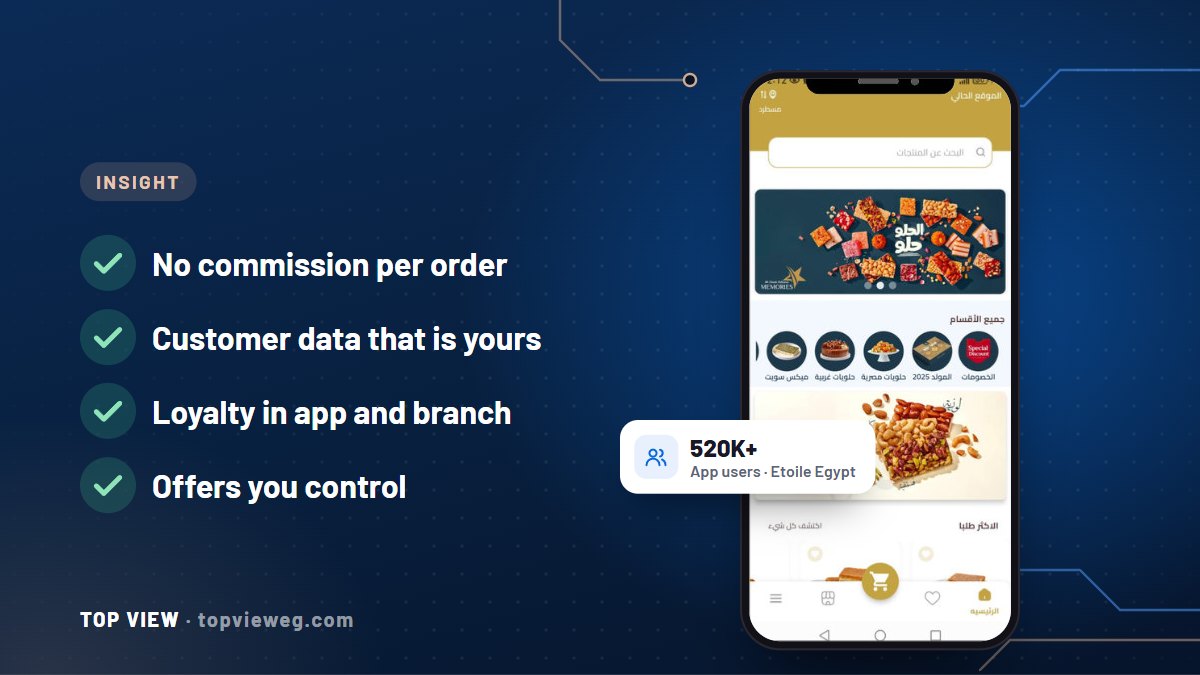
- Your own app: on your customers’ phones, with notifications, saved addresses and loyalty points.
- Delivery apps and marketplaces: they bring their own customers, on their own terms.
- Social media and WhatsApp: conversations that often end in a phone order.
Most brands use a mix. The real question is which channels you own and which you rent. We compare the two in Your own app or delivery apps?
What e-commerce is not
- Not a replacement for your branches. For multi-branch brands, online orders are usually prepared in the branches you already have.
- Not “build it and forget it”. An online store needs updated products, offers and follow-up, just like a shop.
- Not only for big companies. What matters is clear products, a way to deliver, and someone responsible for online orders.
Where to start
Write down how customers order from you today, and where they get stuck: busy phone lines, missed calls, wrong orders, no way to pay online. That simple map usually shows which part of e-commerce will make the biggest difference first.
Next: 7 ways e-commerce helps a business grow, and 8 signs your business is ready to sell online.